

🎖️Join Us / ✨Media Kit / 📊2026 Outlook / 🎥YouTube / 🏛️About Us

🔥 Greetings, Maritime Mavericks!
Everyone thinks a Red Sea comeback simply means shorter routes and lower emissions.
But that’s the surface-level story.
The real 2026 narrative is far more complex:
Carriers are not just deciding when to return —They are deciding how, how fast, and how much risk they are willing to absorb in a market already drowning in capacity and new tonnage.
Here are the 10 real consequences the industry should expect:
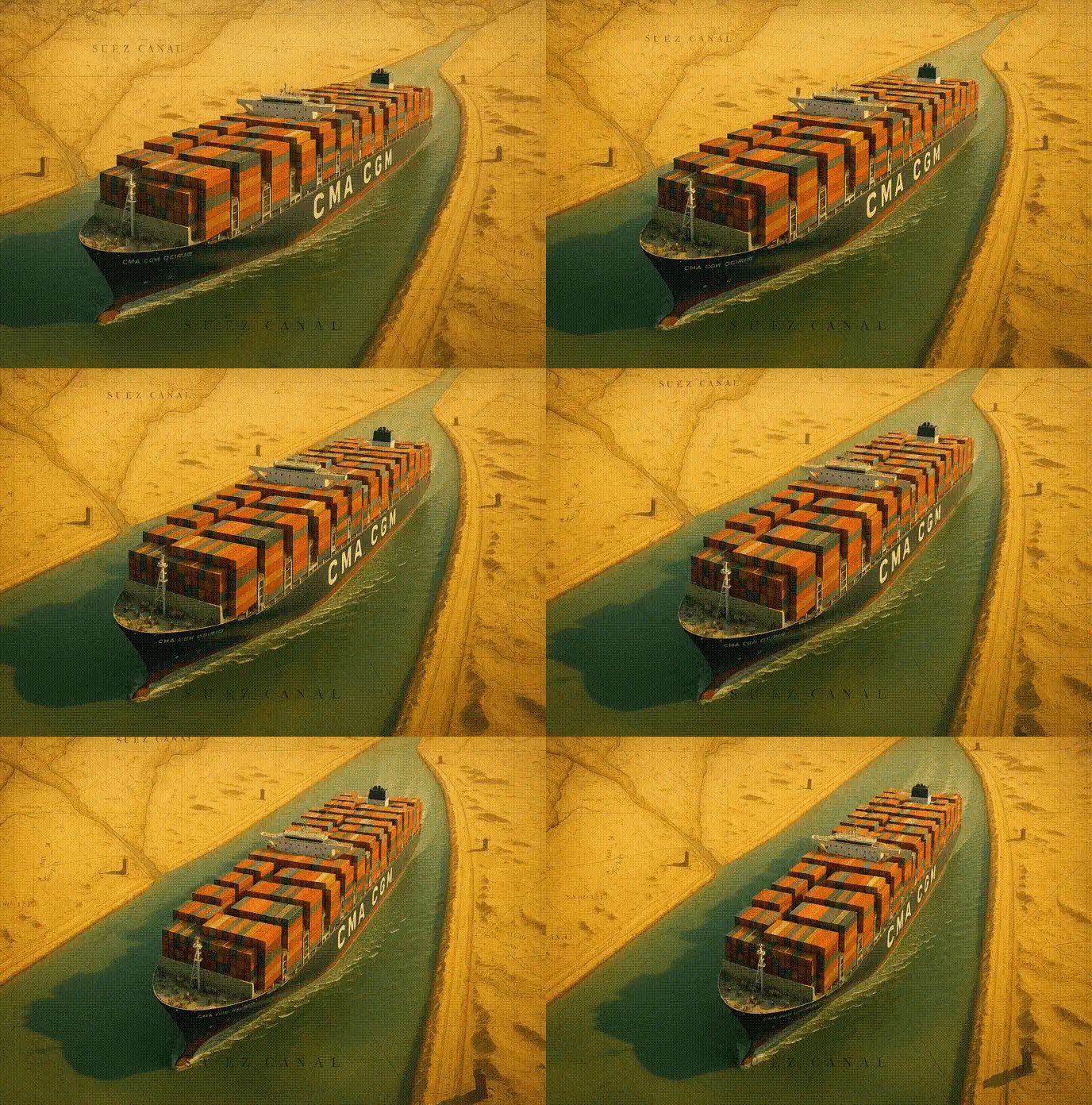


1️⃣ The Orderbook Tsunami Will Hit Exactly When Suez Reopens
Liners avoided the Red Sea for almost two years — an avoidance nobody expected to last this long.
During that time, the global orderbook ballooned to 30% of fleet capacity.
➡️ When Suez reopens, the detour ends.
➡️ SEVERAL % of global capacity is instantly freed.
➡️ And new ships keep being delivered through 2026.
💡Outcome: Overcapacity goes from “bad” to “systemic.”
2️⃣ Two Phases Await: First Chaos, Then Severe Price Pressure
A return to Suez will save ~5500km and ~10 days on Asia–Europe.
Phase 1: Chaos
Earlier arrivals
Terminal clogging
Irregular bunching
Empty container imbalances
Phase 2: The Hammer Comes Down
Once schedules stabilize, massive downward pressure on rates follows.
💡Why? More ships + low demand = brutal price war conditions.