

🎖️Join Us / ✨Media Kit / 📊2026 Outlook / 🎥YouTube / 🏛️About Us

🔥 Greetings, Maritime Mavericks!
For two years, the world’s most important trade artery — the Suez Canal — was half-empty.
Houthis attacked more than 100 merchant ships, damaged many, and forced operators to flee the Red Sea.
Container lines diverted.
Costs exploded.
Transit times stretched by 2–3 extra weeks via the Cape of Good Hope.
Canal revenue dropped sharply.
Air cargo jumped.
Global supply chains bent — but did not break.
Now we see a cautious shift.
A ceasefire.
A calmer corridor.
And major carriers considering a return — not rushing into one.
This is the whole picture — past, present, and what comes next — in one data-driven view with 8 key questions:
🚨 1. What Just Changed?
⚙️ 2. Egypt Is Rebuilding Its Trade Engine
⏳ 3. Why The Industry Still Hesitates?
🚢 4. Who Is Coming Back — And How Fast?
📉 5. What Happens to Freight Rates?
🔮 6. What Does 2026 Look Like?
🌍 7. The Big Picture for Global Trade!
🏁 8. Final Take — The Road Back Will Be Careful and Gradual
Ready? Let’s dive in…

💡This analysis is part of the Maritime Analytica — Global Container Shipping Outlook 2026. For more, become Gold Member or buy the report separately.
🚨 1. What Just Changed?
In November, security conditions improved following the ceasefire in Gaza, and the Bab al-Mandab corridor became calmer.
Key indicators:
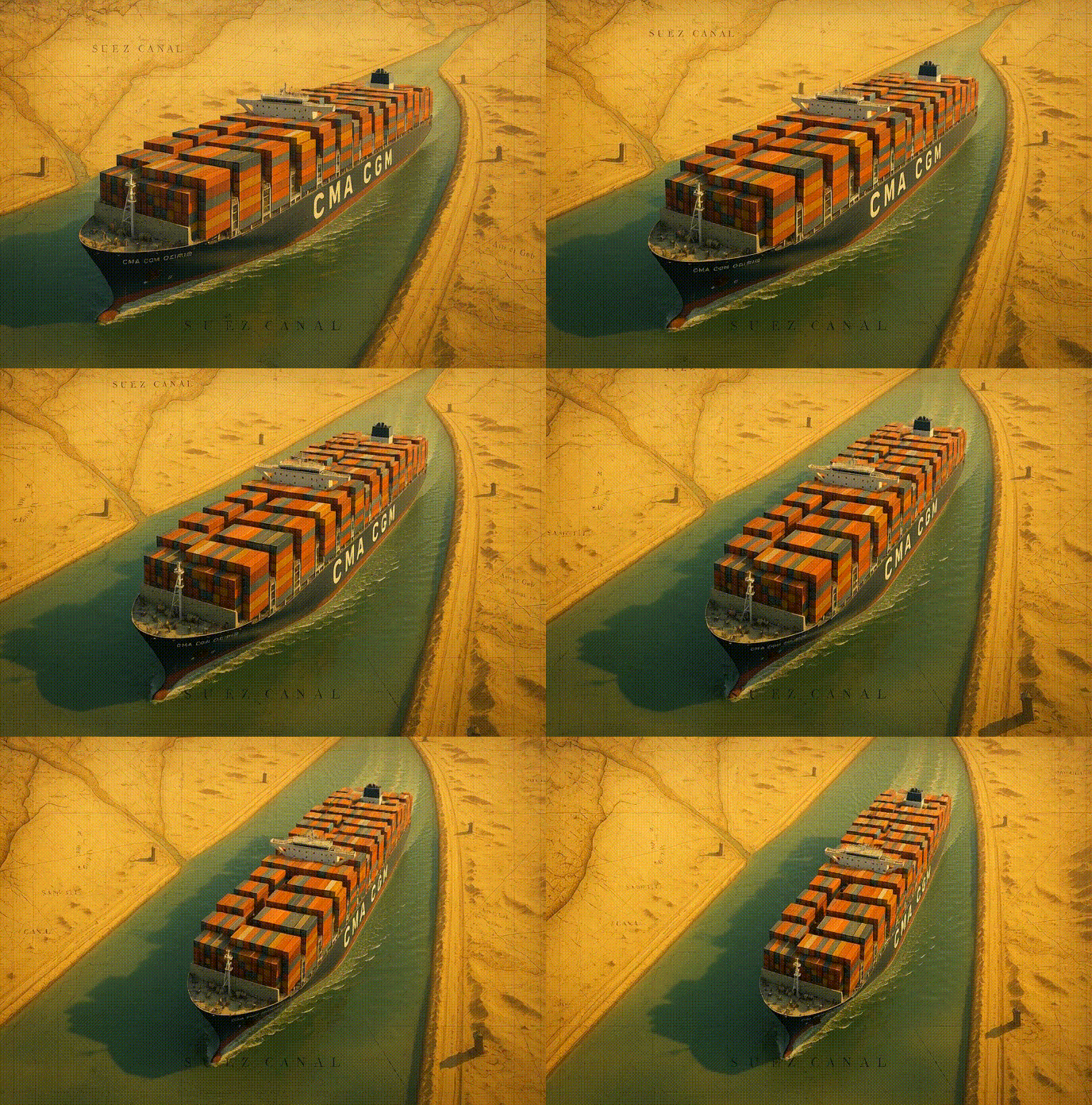
Several CMA CGM vessels completed safe passages through Suez.
October saw the highest Suez return since the crisis began.
Weekly crossings rose noticeably in November.
Egypt responded strongly.
SCA Chairman Admiral Ossama Rabiee declared:
“The Suez Canal is ready to receive mega container ships.”But here’s the important clarification:
✔ The Suez Canal Authority suggested a partial restart in December.
✖ However — Maersk confirmed it has NOT set any return date.
❗ Reports of a full December comeback are misinformation.
Maersk’s official position: “return will happen only when conditions allow and when crew safety is assured.”